Takaichi's election gambit
Sixteen desultory thoughts on what to watch as the campaign unfolds

Thank you for reading Observing Japan. This post is available to all readers.
If you are looking for timely, forward-looking analysis of the stories in Japans’s politics and policymaking that move markets, I have launched a service through my business, Japan Foresight LLC. For 2026, I am preparing a new pricing tier for public institutions. For more information about Japan Foresight’s services or for information on how to sign up for a trial or schedule a briefing, please visit our website or reach out to me.
My firm Japan Foresight published a Japan Risks 2026 report and I am offering it to Observing Japan readers for a discount. Paid subscribers can click here for information on how to purchase. Free subscribers can find information here.
Prime Minister Takaichi Sanae formally announced her intention to dissolve the House of Representatives when the Diet opens on 23 January and hold a general election on 8 February. In no particular order, here are sixteen thoughts and questions on what Takaichi hopes to achieve, the risks she’s facing, and why the general election might not change all that much.
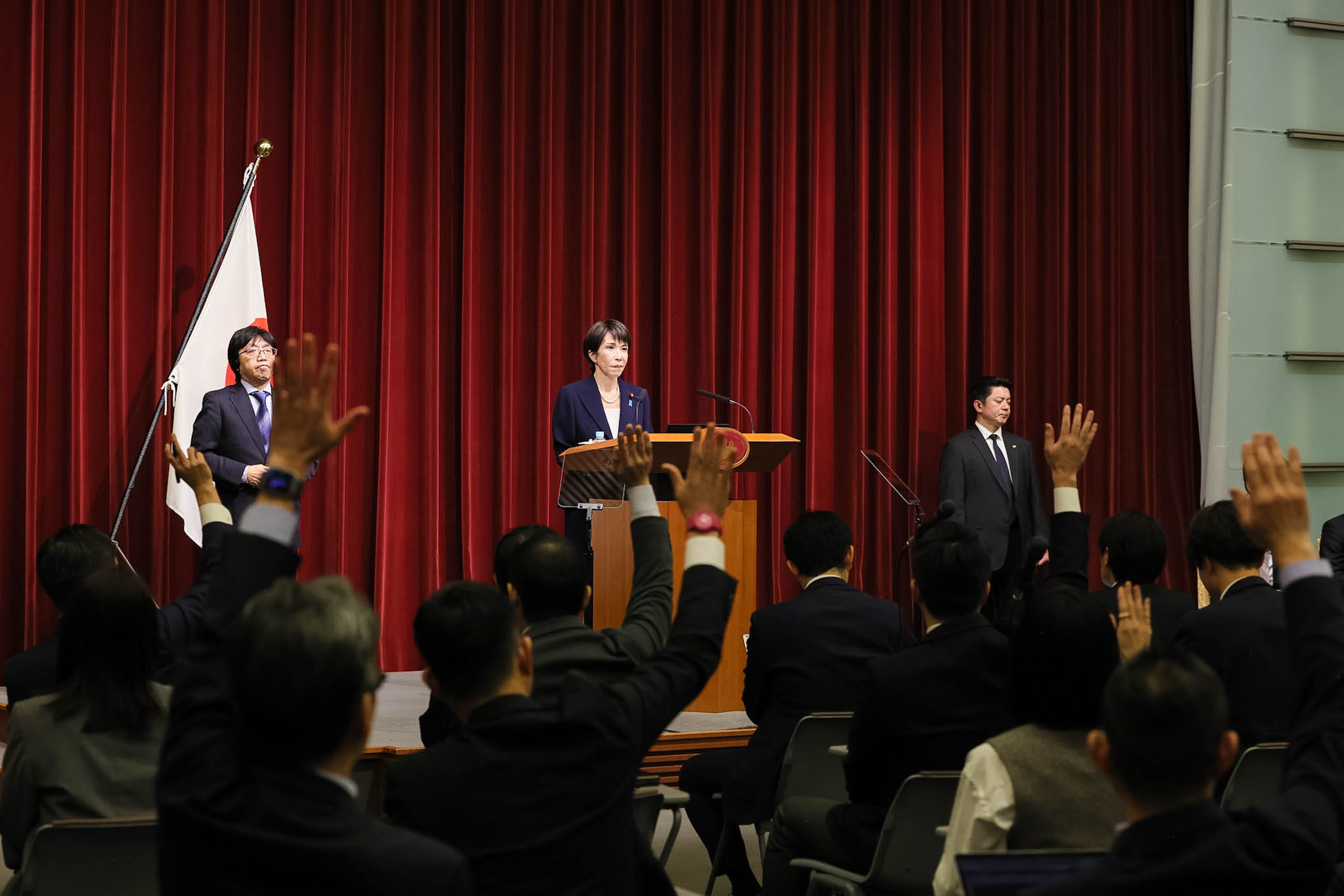
After reading Prime Minister Takaichi Sanae’s explanation for the election in her press conference on 19 January (see the transcript of the Q&A here), it is hard to escape the conclusion that there is not a compelling policy reason for this election. She already had the votes for a budget thanks to the deal with the Democratic Party for the People (DPFP). This feels like an opportunistic bid to convert her popularity into a majority or at least a larger plurality for the LDP.
To the extent that there is a policy logic to this snap election, it may have been provided by Takaichi ally and Liberal Democratic Party (LDP) deputy secretary-general Hagiuda Kōichi, who said over the weekend that if the 2026 budget is delayed, it could enable the government to revise the budget — already a historically large JPY 122.3tn — to give it more of a “Takaichi color.”
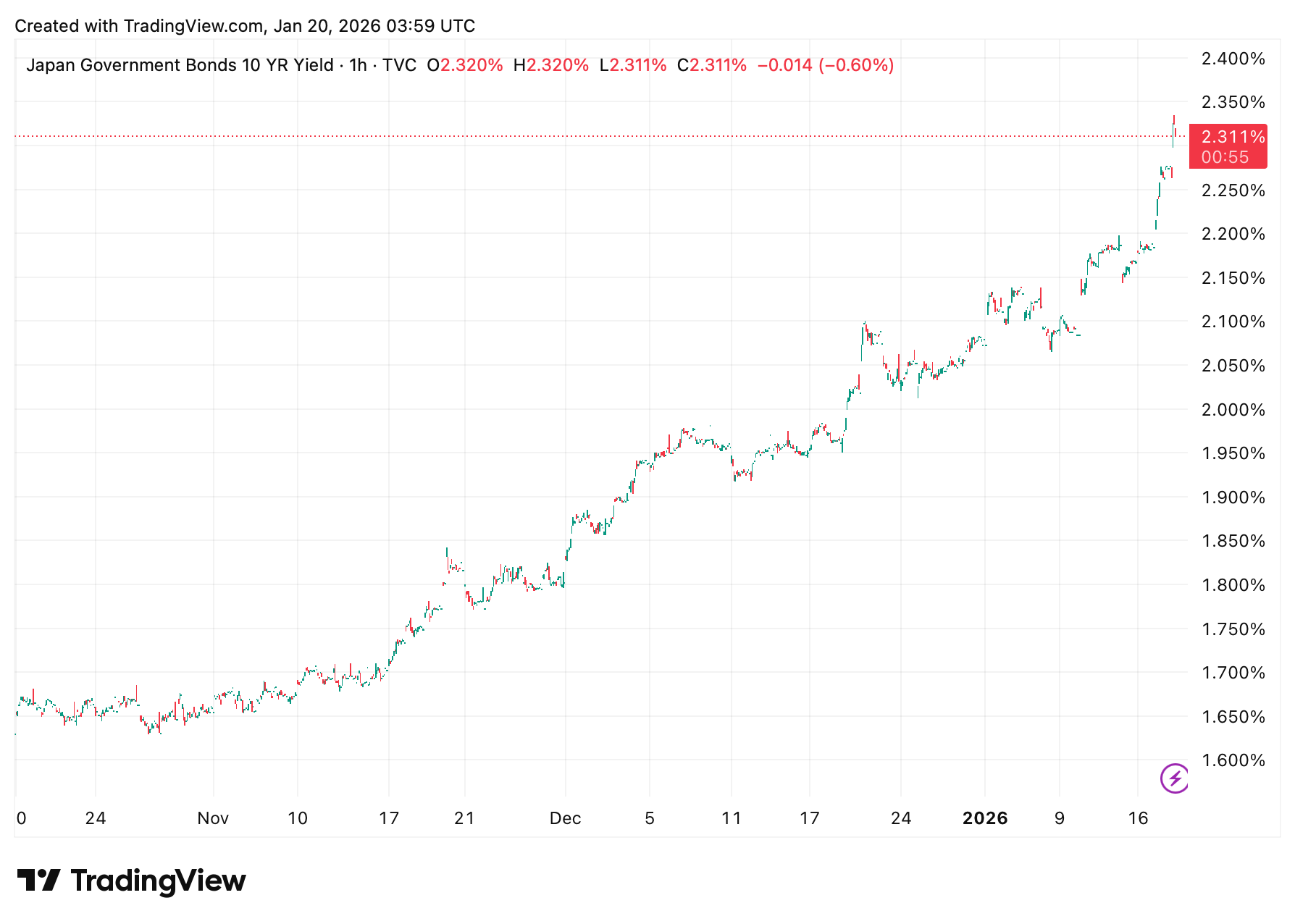
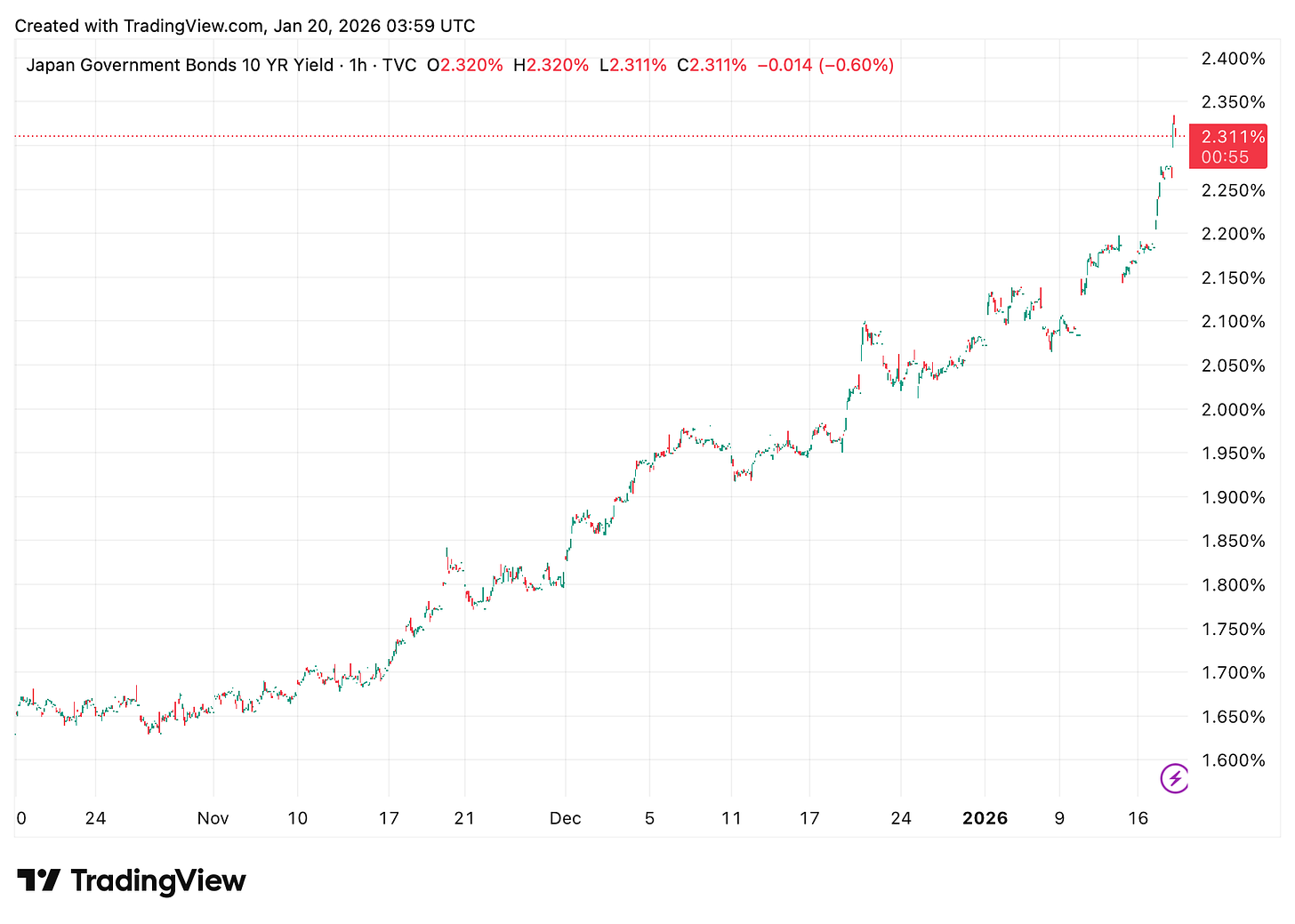
In that vein, it is notable that Takaichi said in her press conference Monday, “We will end this trend of excessive austerity and insufficient investment.” With financial markets already expressing their uneasiness with Takaichi’s views on fiscal policy, through higher interest rates (long-term government bond yields reached a twenty-seven-year high on Monday) and a relentlessly weakening yen.
While she has repeated now familiar arguments about her commitment to fiscal responsibility, her approach to the campaign will solidify the impression that she is determined to deploy fiscal resources to support industrial policy and (ironically) provide relief from the rising cost of living, not least with her full embrace of a consumption tax cut on foodstuffs.
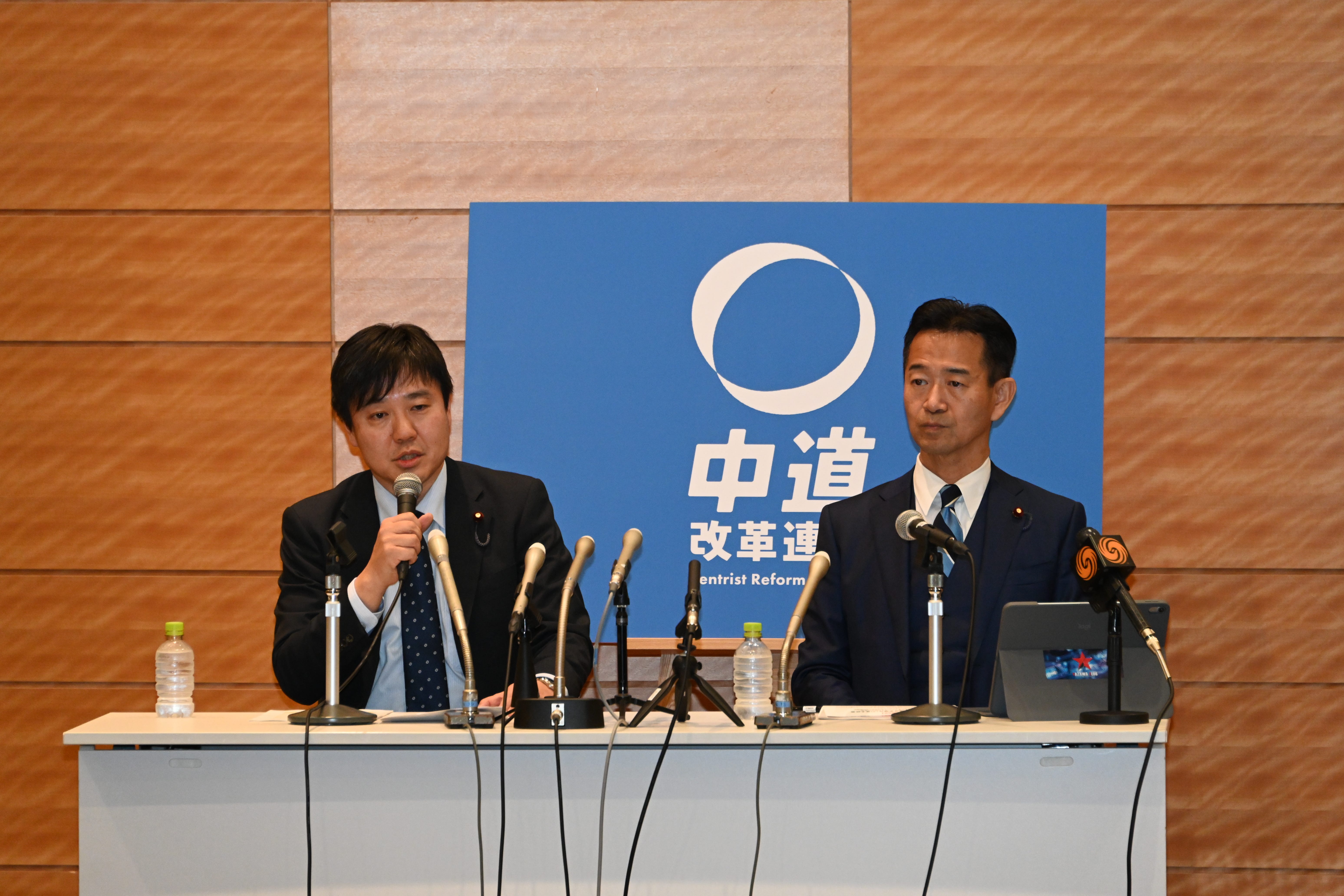
By the same token, she may be creating an opening for the Chūdō, i.e. the Centrist Reform Alliance (CRA), to campaign on fiscal responsibility. In the basic policies released by the new alliance, the party centers economic well-being and points to the weak yen as a driver of rising costs and declining real incomes; while the CRA would face many of the same questions as Takaichi faces about fiscal policy when it comes to how they would pay for what they call “a smart fiscal policy that puts ordinary citizens first,” Noda Yoshihiko, the man who as prime minister broke his own party to pass a plan for raising consumption taxes, may have more credibility on fiscal responsibility than Takaichi.
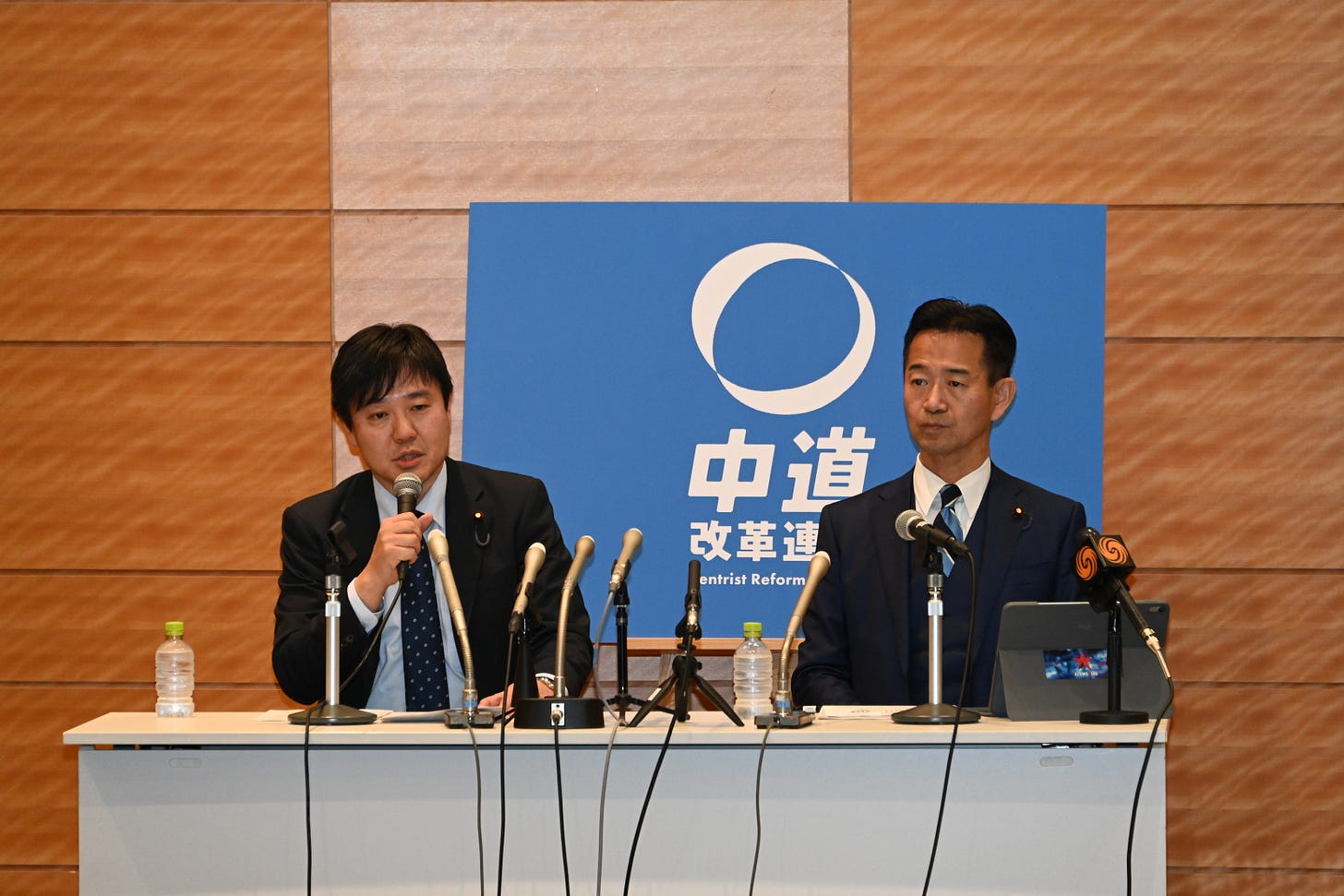
CDP policy chief Honjō Satoshi and Kōmeitō policy chief Okamoto Mitsunari discuss the Centrist Reform Alliance’s basic policies. Source: CDP Still, the party is promising its own consumption tax cut on foodstuffs and other welfare provisions that could unsettle markets.
This election is going to flip the logic of more than a decade of elections on its head. Whereas the second Abe administration’s majorities depended on subdued turnout, Takaichi needs a high turnout election – more like the 2025 upper house elections than the 2024 general election – since her support appears to be strongest among younger voters and lower-propensity voters more broadly. She needs to turn out floating voters who can compensate for the loss of Kōmeitō’s support for LDP candidates.
In that sense, this feels like the LDP trying to engineer a 2005-style victory.1 If the LDP’s brand is toxic, then the prime minister must be able to run on her own brand and distance herself from the party and appeal to floating voters. The more I think about it, the more it seems like complaints from LDP Secretary-General Suzuki Shunichi and LDP Vice President Asō Tarō that they found out about her plans to call a snap election from the media are intended to make her seem more independent from and even opposed to the party, a different kind of LDP politician. That said, she will still be leading a party that will fully welcome party members implicated in the kickback scandal back into the tent; candidates who ran in 2024 without the cushion of being simultaneously included on the party’s proportional representation lists will be back on the PR lists this time.
Takaichi will definitely use foreign policy as a trump card. Particularly during the final years of his second administration, Abe Shinzō was able to use global uncertainty to bolster his electoral prospects. Undoubtedly Takaichi will, like Abe, stress that she has the strength and competence (and rapport with Donald Trump) to navigate a challenging world.
Whatever happens on 8 February, the prime minister has through her decision to call an election brought the Constitutional Democrats and Kōmeitō together – necessity being the mother of invention, after all – and has pushed the DPFP away. If Takaichi does not win an overwhelming victory, she could find herself in a more challenging position after the election.
There are plenty of questions about the viability of the CRA. The new party’s shifts on security policy (accepting the constitutionality of the 2015 security laws) and energy policy (abandoning outright opposition to nuclear energy in favor of tolerating it while “reducing dependence”) could alienate the CDP’s supporters and lay the groundwork for future conflict between the alliance’s left and right wings. Meanwhile, it is unclear how eager Kōmeitō supporters will be to back ex-CDP candidates after having opposed the party when Kōmeitō was in government.
Nevertheless, LDP backbenchers seem genuinely alarmed at the prospect of contesting a general election without Kōmeitō alongside them and surprised at the speed with which the CDP and Kōmeitō pulled together to form the CRA.
In that sense, Takaichi is fighting two campaigns in one. She will be contending with Chūdō – the Centrist Reform Alliance – for older voters, who have been less enthusiastic about Takaichi than younger voters. She will also try to inspire younger voters to turn out and vote for LDP candidates to support her, even if they do not like the LDP itself. In this campaign, she will be fighting against the DPFP and Sanseitō, both of whom helped boost turnout by 6.5 points last year due to their popularity with younger voters. These parties will have a harder time competing with Takaichi on policy terms, so they will have to find a way of tying her to the LDP and the old ways of politics.
It feels like the DPFP really may have the most to lose from the snap election. While the CDP may get some aid from Kōmeitō voters – though there are naturally questions about how well this alliance will work – the DPFP has rejected cooperation with Chūdō but is also positioning itself to run hard against Takaichi. As suggested above, Takaichi and DPFP leader Tamaki Yūichirō will be fighting to appeal to many of the same voters. It is difficult to see how a Takaichi win could be mean anything but a significant setback for Tamaki. Of course, if Takaichi under-performs and the DPFP gains, Tamaki’s bargaining position vis-à-vis the prime minister will be enhanced. Either way, in her press conference Monday Takaichi tried to mollify the DPFP, highlighting its role in finalizing the budget and praising its “policy before politics” stance (“I deeply sympathize with that stance”).
The same logic likely applies to Sanseitō, which has seen some of its support fade since the upper house elections last year. Takaichi has likely stolen some of its thunder, particularly when it comes to policies aimed at Japan’s foreign population and general appeal to conservative voters. But Sanseitō may be wagering that its nationwide network gives it a base of support that can weather the shift and may also be singling out “globalist” LDP candidates, essentially trying to pick up votes in marginal districts between driving a wedge between Takaichi and her own party’s candidates. Of course, with only three incumbents in the lower house, Sanseitō can under-perform its target of between twenty and thirty seats and still be more of a presence after the election.
If Ishin no Kai thought that triggering by-elections for Osaka’s governor and mayor to coincide with the snap election would generate excitement that would drive turnout in the prefecture, the party will be disappointed. No other party is prepared to field candidates against the Ishin incumbents.
At the same time, however, the formation of the CRA means that Ishin no Kai will face competition in all nineteen Osaka electoral districts; the CDP has had little success in Osaka as Ishin no Kai has grown, but Kōmeitō’s strength in the prefecture will perhaps give CDP-cum-CRA candidates better chances than before. Ishin no Kai’s candidates will therefore be contending with both LDP candidates and CRA candidates in the prefecture’s constituencies.
This general election could ultimately be relatively inconsequential. In the best-case scenario – Takaichi rides a wave of popular support to a larger majority for the LDP – she will still lack a majority in the upper house, which may become more manageable with more of a mandate but will still have to be managed. She will still be facing growing pressure from financial markets about Japan’s fiscal future, pressure that would intensify following a large LDP victory. And she will still have to contend with rapidly changing regional and world orders, starting with a visit to Washington in March ahead of Donald Trump’s trip to Beijing in April. As Hagiuda said before Takaichi decided on a snap election, winning a general election in February 2026 does not necessarily guarantee her reelection as LDP leader in September 2027.